

Luliconazole
AntifungalUses of Luliconazole
Luliconazole is an antifungal medicine used to treat fungal skin infections.
It is commonly used for:
- Athlete's foot (tinea pedis): Clears fungal infection between the toes and on the soles of the feet.
- Ringworm (tinea corporis): Treats circular, scaly rashes on the skin caused by fungal infection.
- Jock itch (tinea cruris): Manages fungal infection in the groin area, easing itching and redness.
Side effects of Luliconazole
- Application site irritation
- Itching
- Skin exfoliation
- Blisters On Skin
How Luliconazole works
- Luliconazole helps inhibit the production of ergosterol. Ergosterol is a substance required to maintain the fungal cell membrane.
- Luliconazole inhibits the lanosterol demethylase enzyme, which reduces the amount of ergosterol and causes lanosterol to accumulate.
- A decrease in ergosterol affects the fungal cell membrane, thereby stopping the growth of the fungus.
Certified content
Written By

MBBS
Reviewed By

MBBS, DNB (OBGY)
Expert Advice
Dosage Forms Available
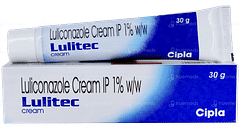
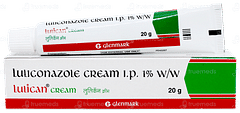
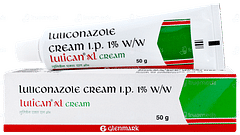
- Luliconazole is applied topically as cream.
Age And Dose Restrictions
- Luliconazole is generally prescribed for adults and, in certain situations, for children. Its safety and effectiveness have been established in children aged 12 years and older for tinea pedis and tinea cruris, and in children aged 2 years and older for tinea corporis.
Contraindications
- No formal contraindications are listed for luliconazole cream. If you are allergic to luliconazole or any of its ingredients, consult your doctor before using it.
Medications To Avoid With This Drug
- There are no interactions of Luliconazole with other medications, but it’s always best to inform your doctor about all the medications you are taking to avoid potential interactions.
Overdose and Missed Dose
- Overdose with topical Luliconazole is unlikely. If accidental ingestion occurs, seek immediate medical attention.
If you miss a dose, apply it as soon as you remember. If it’s almost time for the next dose, skip the missed dose and resume your regular schedule. Do not apply extra to make up for the missed dose.
Management Of Side Effects
- Rarely, severe allergic reactions may occur. If you experience symptoms such as rash, swelling, severe dizziness, or difficulty breathing, seek immediate medical attention.
Use In Driving And Operating Machinery
- Luliconazole is for topical use only and is not expected to affect your ability to drive or operate machinery.
Use In Pregnancy And Lactation
- Luliconazole should be used during pregnancy only if clearly needed and prescribed by a healthcare professional. It is not known whether Luliconazole passes into breast milk. Consult your doctor before using this medication while breastfeeding.
Caution In Other Conditions
- Use with caution if you have sensitive skin or a history of skin reactions. Avoid applying Luliconazole to open wounds or severely damaged skin.
Special Dietary And Lifestyle Recommendation
- Wear loose-fitting, breathable clothing to reduce irritation and allow the affected area to heal.
Make sure to always maintain a dry and clean genital area. Make sure you use a dry, clean towel only for the infected region.
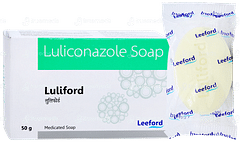
After intense exercise or continuous sweating, you should clean with antifungal soap in the shower.
Never allow others to use your shoes, socks, or towel.
Frequently asked questions
1. Is Luliconazole safe to use in pregnancy?
No, using it during pregnancy may not be safe. Although there is a lack of information in human research, there is evidence from animal studies that this is harmful to a fetus. Your doctor will consider the risks and benefits before a prescription is given. Please consult your physician.
2. How much time does it take to work?
Improvement in symptoms with luliconazole may begin early during treatment. However, it may take longer for the infection to completely clear, so continue using the medicine for the full treatment duration prescribed by your doctor.
3. Is it safe for breastfeeding mothers?
No, if you are breastfeeding, you should not use Luliconazole without first consulting your doctor. It is unknown whether or not this medication passes into breast milk. It is not recommended to be used during breastfeeding unless your doctor considers it necessary.
4. Is it safe for patients with kidney disease to use Luliconazole?
Yes, it's likely safe to take Luliconazole in kidney disease patients. No modification to the dosage is recommended. If you have any problems, you should consult your doctor.
5. Is it safe for patients with liver disease to use Luliconazole?
Yes, it's likely safe to take Luliconazole in liver disease patients. No modification to the dosage is recommended. If you have any problems, you should consult your doctor.
6. Does using Luliconazole cause allergic reactions?
Yes, there is some evidence of Luliconazole may cause allergic responses in some patients. It is not required that anybody who uses Luliconazole may develop allergic reactions. However, if you experience a skin rash, breathing problems, swelling of the lips, cheeks, throat, or tongue, please consult your doctor immediately.
7. What warnings and precautions should I take while using Luliconazole?
If you have an allergic reaction to luliconazole or any of its ingredients, do not use it. If you have any other medical condition or are taking other medicines, tell your doctor before using luliconazole.
8. Should I stop taking Luliconazole if I feel healthy?
No, please do not stop taking Luliconazole without first consulting your doctor. There is a chance that an infection may return if the medicine is suddenly stopped.
9. Does Luliconazole affect fertility?
No, it is unlikely to affect fertility in either men or women. However, there is currently insufficient evidence to justify any clear conclusion. Consult your doctor for the most accurate information.
10. Is it safe to drink alcohol while using Luliconazole?
There is no specific warning regarding alcohol consumption with luliconazole cream. However, consult your doctor about alcohol consumption based on your medical condition and any other medicines you are taking.
11. Is it safe for children to use Luliconazole?
The safety and effectiveness of luliconazole cream have been established in children aged 12 years and older for tinea pedis and tinea cruris, and in children aged 2 years and older for tinea corporis. Its safety and effectiveness have not been established in children younger than 2 years of age.
12. Is Luliconazole fungicidal or Fungistatic?
Luliconazole is primarily fungicidal, meaning it kills the fungus causing the infection.
13. How long does it take for Luliconazole to work?
Luliconazole can start to show improvement in symptoms within a few days, but the full course of treatment should be completed to ensure the infection is fully eradicated.
14. Are Luliconazole and Ketoconazole the same?
No, luliconazole and ketoconazole are not the same, although both belong to the azole class of medicines that act against fungal infections. Luliconazole and ketoconazole are different medicines, and their uses and treatment durations may differ.
15. What is the use of Luliconazole?
Luliconazole is used to treat fungal skin infections such as athlete’s foot (tinea pedis), tinea cruris (fungal infection of the groin) and ringworm (tinea corporis). It helps inhibit fungal growth by interfering with the production of ergosterol.
Luliconazole in other salts
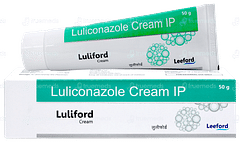
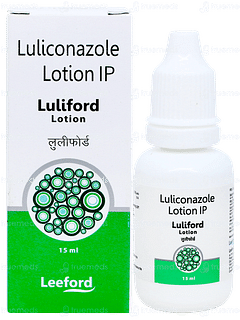
List of medicines for Luliconazole
Company
About UsHealth ArticleHealth StoriesHealth LibraryDiseases & Health ConditionsAyurvedaUnderstanding Generic MedicinesAll MedicinesAll BrandsNeed HelpFAQSecuritySavings CalculatorAdvertise with UsSubscribe
Registered Office Address
Grievance Officer
Download Truemeds


Contact Us
Our customer representative team is available 7 days a week from 9 am - 9 pm.
v4.28.20

2026 - Truemeds | All rights reserved. Our content is for informational purposes only. See additional information.

Our Payment Partners




