Rocuronium
Uses of Rocuronium
Rocuronium is a neuromuscular blocking agent used to relax muscles during surgery and mechanical ventilation.
It is commonly used for:
• Muscle relaxation during surgery: Helps relax skeletal muscles for surgical procedures.
• Endotracheal intubation: Assists in placing a breathing tube during general anaesthesia.
• Mechanical ventilation: Supports muscle relaxation in intensive care patients on a ventilator, administered under close medical supervision.
Side effects of Rocuronium
Injection site pain or reactions
Residual muscle weakness or paralysis
Respiratory depression
Changes in heart rate or blood pressure
Rash or itching
How Rocuronium works
Rocuronium works by blocking the action of acetylcholine, a chemical messenger that normally carries signals from nerves to muscles.
By blocking these signals at the neuromuscular junction, Rocuronium prevents the muscle from contracting, producing temporary muscle relaxation.
Its effects are reversible: once the medicine wears off or is reversed with another medicine, normal muscle function returns.
Certified content
Written By

BDS, MDS
Reviewed By

Bachelor of Dental Surgery
Expert Advice
Dosage forms available
Rocuronium is available for use as an injectable solution.
Age and dose restrictions
This medicine is meant for both adults and children, although specific dosage adjustments might be required based on age and weight.
Contraindications
It is contraindicated in patients with known hypersensitivity to it or its components.
It is also contraindicated in patients with neuromuscular disorders such as myasthenia gravis.
Other medications to avoid
This medicine may interact with antibiotics (such as aminoglycosides and clindamycin), inhalational anaesthetics (like isoflurane and sevoflurane), corticosteroids (like prednisone), and diuretics (like furosemide).
Overdose and missed dose
An overdose can lead to prolonged neuromuscular blockade, resulting in extended paralysis and respiratory depression. Immediate medical intervention is required to manage breathing and maintain airway integrity.
If a dose is missed during a procedure, the attending anaesthesia professional will decide how to proceed based on the current stage of anaesthesia and surgical status. Generally, missed doses in these settings are adjusted immediately under controlled conditions.
Management of side effects
Most side effects are temporary and generally harmless and resolve when discontinuing this medicine. However, if you experience any severe side effects or worsening of any of the symptoms, please consult your doctor.
Mild injection site reactions like pain or swelling can sometimes be managed by applying a cold compress to the area.
Experiencing mild nausea post-operation can often be managed by adjusting the timing of your next meal after consulting with your care team.
Use in driving and operating machinery
Rocuronium impairs muscle function significantly; therefore, it affects the ability to perform potentially hazardous tasks such as driving or operating machinery. Patients should not drive or engage in activities requiring complete muscle coordination after administration until they have fully recovered from its effects.
Use in pregnancy and lactation
The safety for use during pregnancy and lactation has not been established.
Caution in other conditions
Special caution should be observed when administering this medicine to patients with impaired kidney or liver function, as it may affect the medicine's metabolism and excretion.
Patients with cardiovascular instability should also be monitored closely owing to potential fluctuations in heart rate and blood pressure.
Special dietary and lifestyle recommendations
Ensure adequate hydration before undergoing surgery where Rocuronium might be used, as dehydration can influence drug effectiveness and recovery.
Minimise caffeine intake as it can interfere with sleep patterns, especially post-surgery.
Avoid alcohol consumption for at least 24 hours before surgery, as it can interfere with anaesthesia and other medications used during surgical procedures.
Frequently asked questions
Is Rocuronium a steroid?
No, it is not a steroid. It belongs to a class of medications known as neuromuscular blocking agents.
Does Rocuronium affect sleep patterns?
There is no direct correlation between this medicine and changes in sleep patterns. It is used for muscle relaxation during surgery and mechanical ventilation, not for sleep disorders.
Will Rocuronium affect fertility?
There is no substantial evidence indicating that it adversely affects fertility; its use is primarily focused on anaesthesia management rather than reproductive health.
Are there any particular diet restrictions while taking Rocuronium?
No, there is no particular dietary restrictions are associated with this medicine. However, it is always advisable to follow a balanced diet unless your doctor advises otherwise.
How long does the effect of Rocuronium last?
The average duration of its effects is around 60 to 90 minutes for standard doses in adults, it can be longer in elderly patients or those with compromised organ function.
How much time does Rocuronium take to work?
Rocuronium works rapidly after intravenous administration and is particularly useful for rapid sequence intubation.
What is the best time to take Rocuronium?
Rocuronium is administered by anaesthesia professionals during surgical procedures. Hence, the timing of administration is determined by the clinical need.
List of medicines for Rocuronium
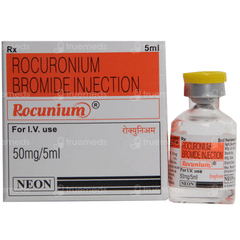

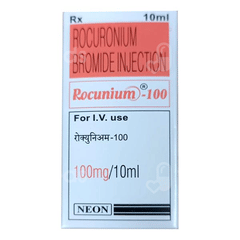
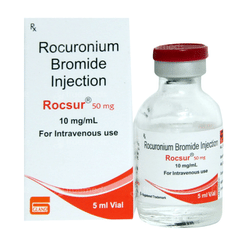

Company
About UsHealth ArticleHealth StoriesHealth LibraryDiseases & Health ConditionsAyurvedaUnderstanding Generic MedicinesAll MedicinesAll BrandsNeed HelpFAQSecuritySavings CalculatorAdvertise with UsSubscribe
Registered Office Address
Grievance Officer
Download Truemeds


Contact Us
Our customer representative team is available 7 days a week from 9 am - 9 pm.
v4.28.24

2026 - Truemeds | All rights reserved. Our content is for informational purposes only. See additional information.

Our Payment Partners